Late one night in Assam, India, a mother elephant and her tiny calf struggled through the darkness, searching for food that had long since vanished from their forest home.
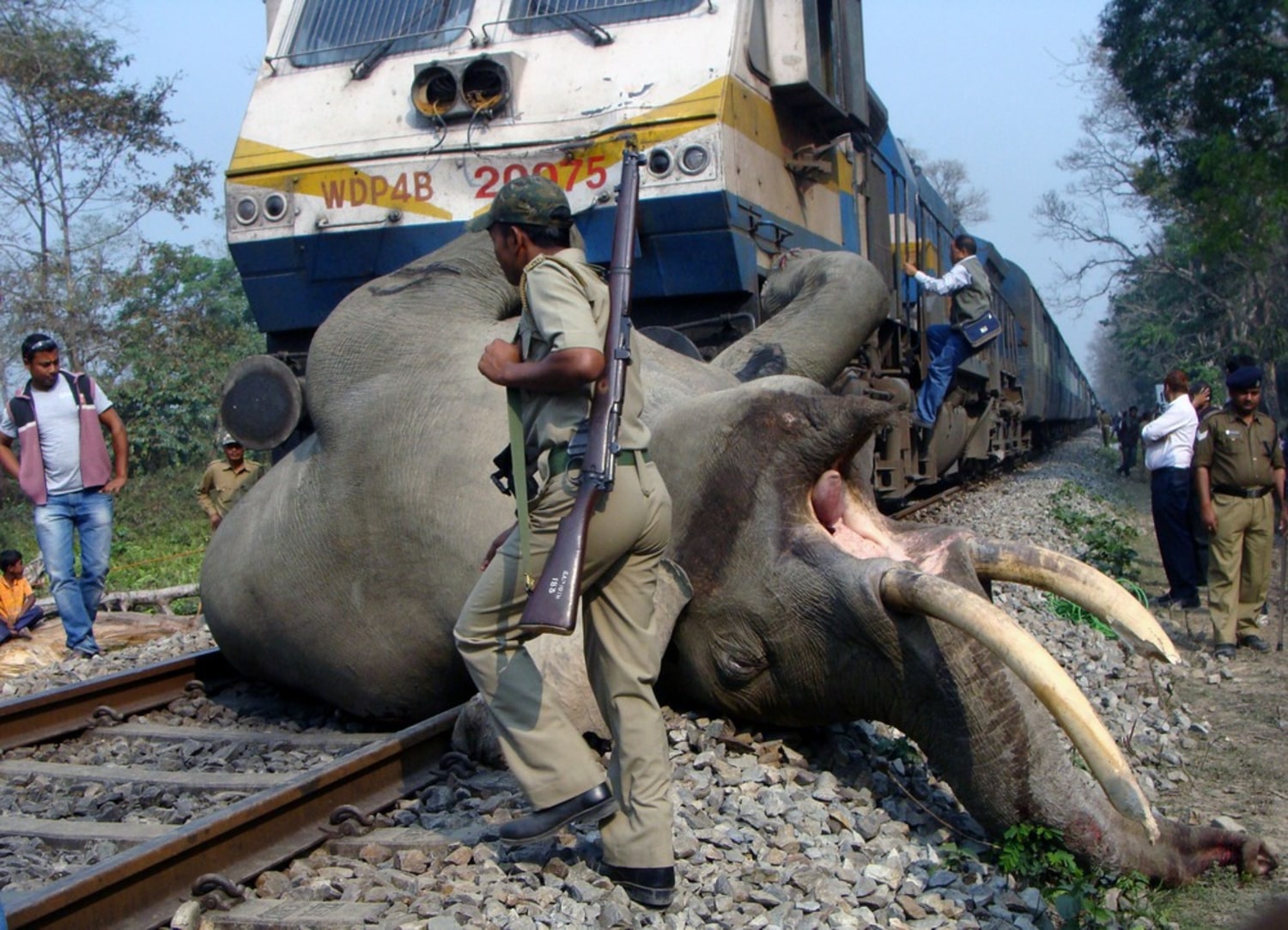
Exhausted and weak, they wandered onto railway tracks, unaware of the deadly danger approaching. By morning, villagers discovered the heartbreaking sight — the mother and calf lying lifeless side by side, a devastating reminder of the perils wild elephants face in human-altered landscapes.

As rescuers arrived at the scene, their hearts sank at the sight of the two elephants, but their attention soon turned to what lay nearby. Scattered along the tracks were scraps of half-eaten crops and plastic remnants — a cruel trap that had forced the elephants out of their forest and onto the dangerous rails. The evidence painted a grim picture of human encroachment, scarcity, and the desperation that led to this fatal encounter.

Despite the tragedy, the team worked quickly to document the scene and care for the forest around it, hoping to prevent similar losses. Villagers wept silently, realizing that these gentle giants had suffered not only from hunger but also from a world that no longer had space for them. The mother and calf’s story became a solemn call to protect the remaining wild herds before more lives are lost.