For Wioleta and Fryderyk Oleksy, life changed forever in September 2021. Their little boy, Miłosz, had just celebrated his second birthday—candles flickering, gifts unwrapped, laughter filling the room. He was curious, playful, full of life, the picture of childhood innocence. No one could have imagined that just days later, their world would be consumed by fear.
It began subtly. In late August, Miłosz began to limp. At first, the parents thought it was a minor injury, a scraped knee, or tired little legs. But soon, the limp persisted, and a small swelling appeared near his collarbone. Concerned, they visited their family doctor. Within hours, Miłosz was referred to the Oncology and Hematology Clinic in Białystok.
The tests that followed shattered their lives. Miłosz had a malignant adrenal tumor. Worse, it had already metastasized—invading his spine, lymph nodes, and even bone marrow. Stage IV neuroblastoma. Words that no parent should ever hear. In an instant, the future they had envisioned vanished.
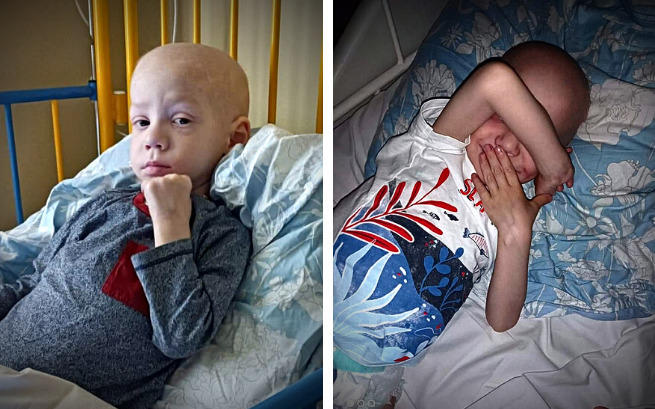
The Oleksys’ lives became a whirlwind of hospitals, consultations, and sleepless nights. Aggressive chemotherapy began immediately. The tiny boy endured treatment cycles that would exhaust an adult. His body was weak, his spirit tested, yet he persevered. Surgery followed to remove the tumor, and soon after, an autologous hematopoietic stem cell transplant. Every procedure brought hope—and terror. Complications emerged. Miłosz’s intestines became inflamed, his blood vessels damaged, and for a moment, his life hung by a thread.
For Wioleta and Fryderyk, the hours were unbearable. They watched their son connected to monitors and tubes, every beep a reminder of the fragility of his life. Every breath a victory. Every movement a triumph. They prayed, they held his tiny hand, and they refused to give up.
By February 2025, Miłosz faced yet another life-threatening challenge. Years of chemotherapy had taken a toll on his liver. Cirrhosis had set in, leaving no alternative but a transplant. The donor? Miłosz’s sister, Weronika. In an act of profound love, she gave part of herself to save her brother. The surgery was long, exhausting, and risky. The Oleksys spent each minute praying, hoping, waiting for news. After a week in intensive care, their son began to recover. Slowly, he ate again. He drank. He regained strength, a tiny miracle in the face of overwhelming odds.

Yet even recovery brought its own fears. Neuroblastoma is relentless. Even after a successful transplant, the threat of recurrence looms. Living with a child who has endured cancer means living in a constant state of vigilance—every checkup is anxiety, every new symptom a potential setback. Miłosz’s days are filled with rehabilitation, medications, tests, and hospital visits. He is learning to rebuild the childhood that illness attempted to steal from him.
Despite it all, Miłosz is a fighter. He smiles. He laughs. He grows stronger with each passing day. His resilience inspires every doctor, nurse, and family member who witnesses his journey. Every milestone—walking independently, eating a meal, holding a toy—is a victory celebrated like a triumph over impossible odds.
But the financial cost is staggering. Treatments, medications, rehabilitation, travel, and post-transplant care add up. The Oleksys are not able to shoulder this alone. Every donation is vital. Every kind word, every prayer, every contribution is a lifeline for Miłosz—a way to keep him fighting, to keep hope alive.
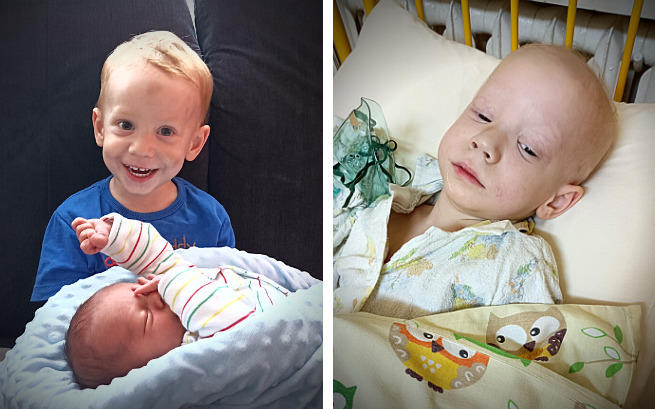
Even in the darkest moments, the Oleksys refuse to give in to despair. They share their story not for sympathy, but to give their son a chance at life. To remind the world that childhood cancer is real, brutal, and urgent. And that compassion, action, and generosity can save lives.
Miłosz’s journey has been long and grueling. From the first limp that revealed a silent tumor, to months of chemotherapy that ravaged his small body, to a stem cell transplant that left him vulnerable and fragile, and finally to a life-saving liver transplant from his sister—every day has been a battle. Yet, through it all, he has remained a symbol of courage, a reminder of the strength that can reside in the smallest of bodies.
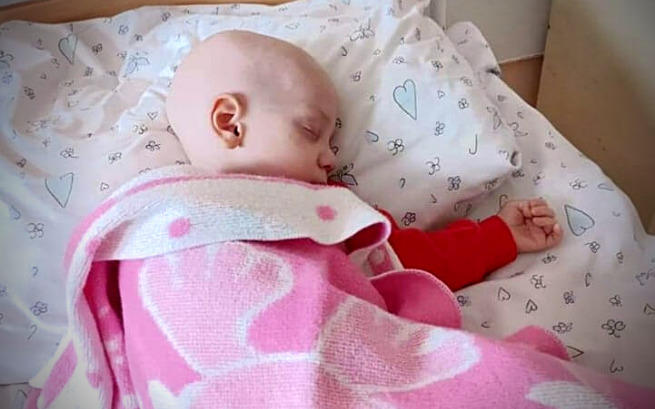
The Oleksys have learned to navigate a new reality. Their days are structured around medications, rehabilitation, and checkups. They measure each breath, each step, each smile. And though fear is never far away, hope endures. Miłosz has taught them, and everyone who hears his story, that the human spirit—especially that of a child—can defy expectation.
This is not just a story about cancer. It is a story about love, resilience, and the power of family. It is about a little boy who has faced unimaginable adversity and continues to fight. It is about a sister whose selflessness made life possible. And it is about parents who refuse to surrender, who stand every day at the bedside of their child and say, silently and fiercely, “We will not give up. We will fight.”
Miłosz’s story is still unfolding. The road ahead is long, uncertain, and fraught with challenges. But with your support—through donations, awareness, and prayers—he can continue to grow, to heal, and to live the life that every child deserves.
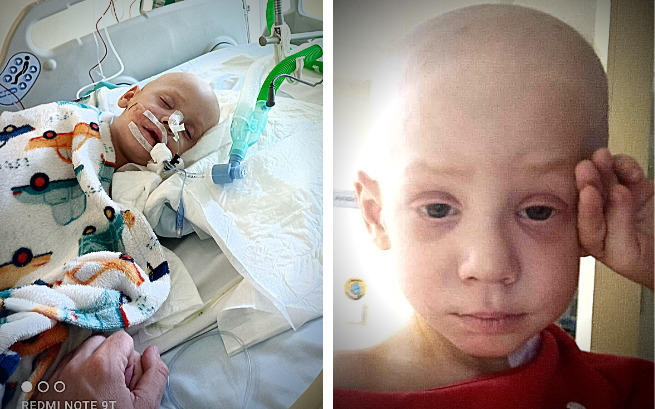
Every moment counts. Every day is precious. Every action can save a life.
Help Miłosz. Help a family reclaim hope. Because together, we can give this little boy the future he deserves.
Miłosz’s fight is far from over—but neither is his courage. Neither is his story. And neither is the love of those who will do everything to keep him alive.