Voyager 1 has been flying through space since before most of the planet was born.
It has been quietly minding its own business beyond the edge of the solar system like an introverted grandparent who left the house in 1977 and just kept walking.
But this week, the unthinkable happened.
Voyager 1’s final transmission reportedly stopped, glitched, faded, or flatlined, depending on which headline you clicked.
Suddenly, humanity collectively remembered that it had sent a fragile metal box into cosmic darkness with a golden record, a polite greeting for aliens, and absolutely no emotional exit plan.
The moment engineers confirmed that Voyager 1’s latest signal was either incomprehensible, incomplete, or disturbingly quiet, the world reacted with the calm maturity of a species that once panicked over a printer jam.
Social media instantly declared the probe dead.

The mission was over.
The universe was officially closed for business.
Meanwhile, NASA calmly explained that the spacecraft is still technically alive.
It is just extremely tired.
Very far away.
And communicating like someone texting through a tunnel in 1999.
For context, Voyager 1 is more than 24 billion kilometers from Earth.
That means every whisper it sends home takes over 22 hours to arrive.
Its final garbled transmission carried the emotional weight of a message that says “hello?” followed by eternal silence.
Scientists insist this is not the end.
Not yet.
But the internet has already emotionally buried the probe.
Poetry has been written.
And the cosmos has been accused of being rude.
The transmission issue reportedly involves corrupted data and unreadable signals.
Onboard systems are quite literally running out of power as Voyager’s plutonium battery continues its slow, inevitable fade.
Scientists describe this with words like “expected,” “inevitable,” and “within mission parameters.
” Everyone else hears something very different.
They hear that the loneliest object ever built by humans is dying alone in the void.
Experts appeared immediately, as they always do.
They explained why this is not scary.
Except when it absolutely is.
One space analyst said Voyager’s silence marks “the symbolic end of humanity’s first handshake with the universe.”
This is apparently a normal thing to say before breakfast.
Another claimed this moment proves that “deep space exploration has emotional consequences we failed to budget for.”
Somehow, that feels both dramatic and accurate.
NASA engineers, who have been keeping Voyager alive for decades using software older than most modern office chairs, insisted that the probe may still recover partial communication.
Fixes are being attempted.
Commands are being carefully uploaded with the patience of people trying to wake a very elderly computer.
But they also admitted that Voyager is now operating beyond any realistic expectation of full recovery.
This is scientist code for “we are proud of it and also preparing ourselves.”
The emotional punch comes from the fact that Voyager 1 is not just a spacecraft.
It is a cultural artifact.
A cosmic postcard.
A floating time capsule carrying Earth’s greatest hits.
These include greetings in dozens of languages, whale sounds, and music selections that boldly assume aliens enjoy Bach.
Portable speakers
Now that this messenger may finally be falling silent, the symbolism is hitting hard.
Nothing says existential dread like realizing the universe might have already received our mixtape and chosen not to reply.
Fake experts wasted no time capitalizing on the moment.
One self-described “interstellar communications consultant” claimed Voyager’s silence proves that “the universe heard us and decided we talk too much.”

Another insisted the probe was “never meant to come back,” which is technically true but emotionally unhelpful.
A third suggested that Voyager has “transcended communication.”
This is not a thing.
But it sounds profound if said slowly.
Media outlets leaned aggressively into the drama.
They called the event “Voyager’s final goodbye.”
Others labeled it “the last whisper of humanity.”
Some went with “the end of our voice in the stars.”
NASA repeatedly clarified that the probe did not send a poetic farewell.
It did not choose silence.
It did not suddenly gain sentience.
But tabloids are not here for technical nuance.
They are here to make you feel things.
Preferably while staring at an image of deep space that looks suspiciously like a desktop wallpaper.
As news spread, people began projecting wildly different meanings onto the moment.
Some called it heartbreaking.
Others called it humbling.
A surprising number called it “rude of the universe.
” Voyager 1 represents a rare combination of scientific achievement and emotional vulnerability.
It is both a triumph of engineering and a reminder that even our longest journeys eventually run out of battery.
One astronomer noted that Voyager 1 has already exceeded every expectation placed on it.
It survived decades beyond its intended mission.
It left the solar system.
It crossed into interstellar space.
It continued sending data from a region no human object was ever supposed to reach.
This should feel like a victory lap.
Instead, it feels like watching a candle flicker in a very large, very indifferent room.
The golden record aboard Voyager suddenly resurfaced in conversation.
People rediscovered that humanity once confidently sent its cultural highlights into space without knowing who might hear them.
Polite greetings.
Scientific diagrams.
Music choices that assume the universe is emotionally receptive.
Portable speakers
Now that the messenger carrying those sounds may finally be going quiet, the gesture feels both brave and slightly embarrassing in retrospect.
Online reactions escalated quickly.
Memes portrayed Voyager as a lonely traveler waving goodbye.
Others suggested it finally “muted the group chat.”
More philosophical posts argued that the probe’s silence is a metaphor for humanity shouting into the void and learning that the void does not always clap back.
This is not wrong.
It is also not helpful at three in the morning.
NASA attempted to keep the tone measured.
Engineers explained that Voyager’s systems degrade one instrument at a time.
Power is carefully rationed.
Silence does not necessarily mean death.
But their careful phrasing could not compete with the emotional reality.
Voyager 1 is now closer to the end of its journey than the beginning.
No amount of mission updates can change the fact that we are watching history slowly dim.
Some commentators tried to turn the moment into motivation.
They insisted Voyager’s silence should inspire renewed space exploration.
More missions.
Bigger dreams.
Less fear of distance.
Others argued that it proves space is cold, lonely, and completely uninterested in our feelings.
Somehow, this feels equally motivating and depressing.
The most dramatic twist came when one engineer described Voyager as “a message still traveling even when it cannot speak.
” It sounds poetic.
Then you remember it is literally a powerless machine drifting endlessly through interstellar space.
It carries our voices without the ability to add new ones.
It may be the most accurate representation of human legacy anyone could accidentally invent.
Critics, because there are always critics, questioned why humanity mourns a machine while ignoring problems on Earth.
The internet responded by explaining that humans are capable of caring about more than one thing at once.
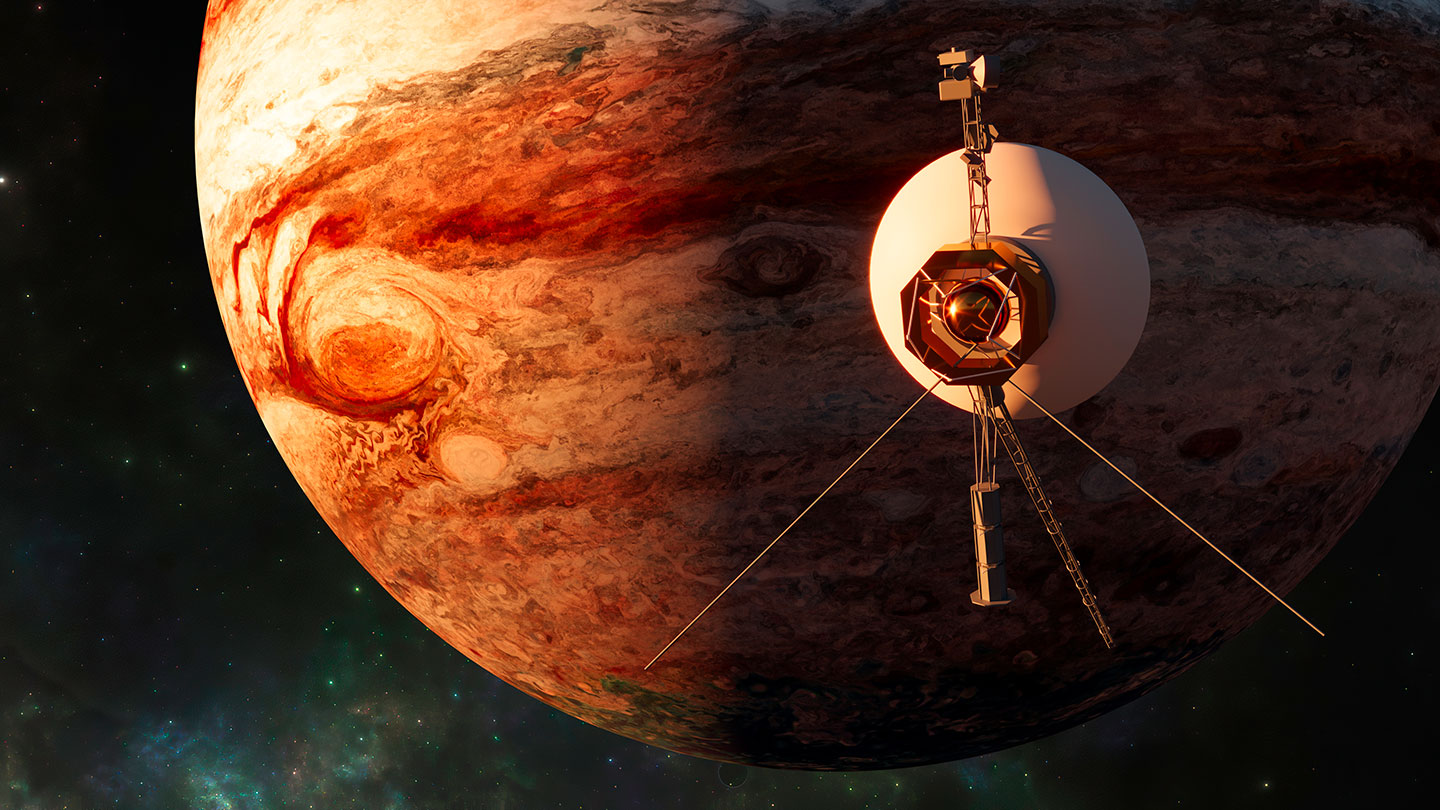
Especially when one of those things is a brave little robot that outlived disco, the Cold War, and several operating systems.
As the world processed the news, one thing became clear.
Voyager 1’s silence is not just a technical milestone.
It is a cultural moment.
It forces humanity to confront the scale of space.
The limits of technology.
And the uncomfortable truth that even our greatest achievements eventually fade into static.
They drift farther and farther away until they are only remembered by those who sent them.
NASA says Voyager will continue its journey regardless of communication.
It will sail silently through the galaxy long after Earth has moved on to newer probes.
Newer headlines.
Newer existential crises.
Somewhere out there, a tiny artifact of humanity will keep going.
It carries proof that we once dared to reach beyond ourselves, even when we knew we might never hear back.
And that is why Voyager 1’s final transmission stopped the world.
Not because it ended with a bang.
Not because of a mystery signal.
Not because of an alien reply.
It stopped the world because it reminded us that exploration is an act of hope without guarantees.
Silence is sometimes the answer.
And the bravest messages ever sent were the ones that did not expect applause.
They only required the courage to be heard at all.