On October 10, 2018, my life changed forever. My five-year-old son, Wiktor, had been diagnosed with a tumor in his cerebellum. The doctors explained that it was a ganglioglioma, a rare childhood tumor classified as WHO Grade I, moderately malignant, and infiltrative.
I remember sitting in the sterile hospital room, feeling frozen, as the words sank in. The realization that my child’s life would never be ordinary hit me with an unbearable weight. Nothing could have prepared me for the helplessness and fear that followed.
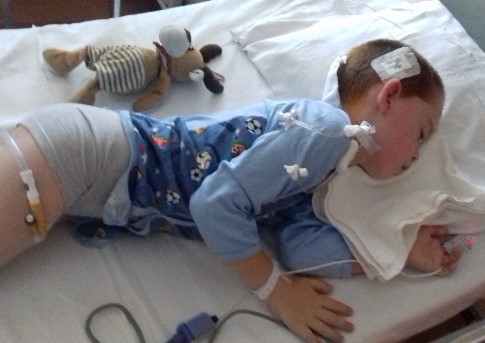
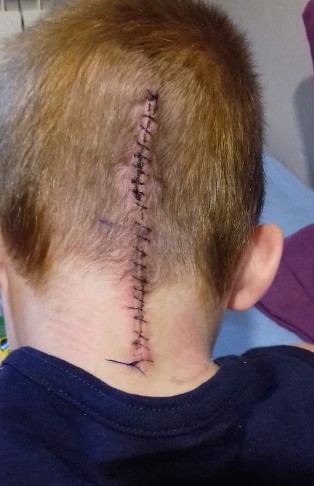
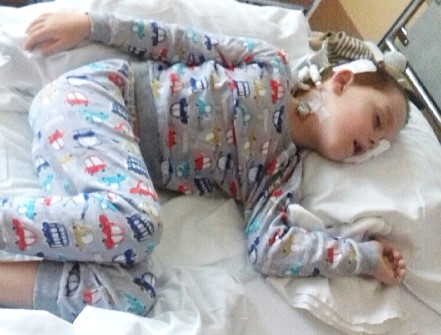
Just two weeks later, on October 23, Wiktor underwent a suboccipital craniotomy, a delicate biopsy of his tumor. The procedure lasted five hours, and though technically successful, it left me in shock. Seeing my son surrounded by machines, wires, and monitors while he struggled to breathe made me feel powerless.
When he woke up, his body betrayed him. Severe dizziness, double vision, tremors, and weakness made every movement a struggle. His small frame seemed so fragile, and each symptom reminded me of the fragility of life itself.
The three-week wait for biopsy results felt endless. Each day was a silent battle against panic, anxiety, and an overwhelming sense of helplessness. Every moment away from him was torture, and every night I prayed for answers that I feared I might never receive.
Signs of his illness had been present months before, but they were misread. Since July 2017, Wiktor had experienced episodes of dizziness, vomiting, headaches, and balance issues. Doctors initially suggested gastrointestinal problems, migraines, or labyrinthine disturbances in the ear.
I knew something was wrong. My instinct as a mother refused to accept the easy explanations. I insisted on further evaluation, and eventually, an MRI revealed a lesion in his right cerebellar hemisphere.
The lesion was large, spanning more than four centimeters and impacting critical structures. It slightly narrowed the fourth ventricle and extended into the cerebellar peduncles. The doctors in Warsaw referred us to the Children’s Health Center immediately, where we received the devastating news that the tumor could not be removed surgically.
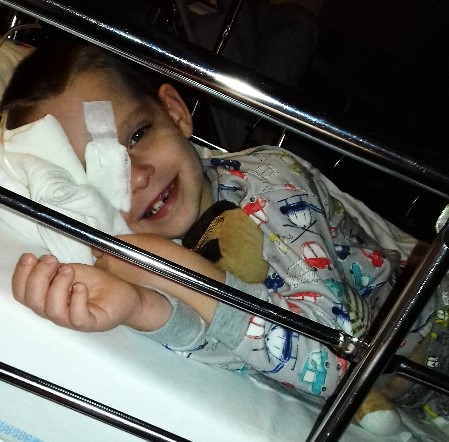
Wiktor was only five years old. He was bright, polite, and full of life, yet now faced a battle beyond his understanding. His creativity, love for puzzles, and talent in recitation competitions made me ache for the normal childhood experiences he deserved.
The tumor’s location made conventional treatments like radiotherapy impossible. Chemotherapy was risky and could result in permanent nerve damage. Each treatment option carried tremendous risks, and every choice seemed like a gamble with his life.
I felt alone yet determined. Raising him on my own, I knew I had to fight with every ounce of strength I had. My own experiences with scoliosis and torsional muscular dystonia had taught me resilience, but this was unlike anything I had faced before.
The days blurred into weeks. We traveled constantly for consultations and tests, trying to understand the best path forward. I spent countless nights awake, calculating oxygen saturation levels, and watching for subtle changes in his strength, his gait, his energy.
His oxygen levels often dropped to dangerous ranges, leaving me terrified. Even sitting or standing required effort from him, and his fingernails and lips turning blue were constant reminders of the seriousness of his condition. Each small victory, like walking a few steps without assistance, felt monumental.
Yet despite all these challenges, Wiktor refused to give up. He continued to smile, to play, and to engage with the world around him. His resilience inspired me to push forward, to seek every possible avenue of treatment, and to refuse to accept that this was the end of his story.
We explored specialists, new therapies, and treatment options across Poland and abroad. Each step came with financial and emotional strain, but I knew I could not wait passively. Waiting could cost him his life.
I learned about Professor Hanley in the United States, an expert in complex pediatric heart and brain conditions. His reputation gave me hope for a potential treatment plan that could stabilize Wiktor and give him a chance at a fuller, safer life.
We began consultations, gathered medical records, and prepared for travel and treatment abroad. Every meeting, every email, every phone call was a step toward fighting for my son. It became clear that this journey would require every resource I could access, both emotionally and financially.
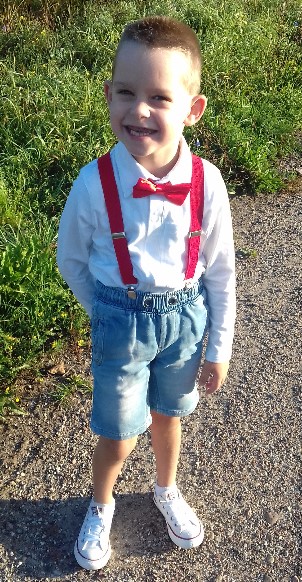
During this time, Wiktor continued to live his life with the courage of a child much older than his years. He rode his bike, solved puzzles, and recited poetry, sometimes forgetting the danger that lurked inside his brain. His innocence was a reminder that he was still a child, and I was determined to protect that as fiercely as I could.
There were moments of despair that felt unbearable. Some days, I thought we could not continue. The uncertainty, the medical complexity, the endless “what ifs” were crushing. Yet each time, Wiktor’s tiny hand in mine reminded me why I could not stop fighting.
We faced setbacks after surgeries, complications, and terrifying hospital stays. Every improvement felt fragile, and every relapse reminded me of the stakes. But through it all, Wiktor’s spirit remained unbroken, and his desire to live illuminated even the darkest days.
As a mother, I became his advocate, his protector, and his voice. I navigated the complexities of medicine, the bureaucracy of health systems, and the emotional toll of uncertainty. I learned to fight on multiple fronts, balancing fear, hope, and relentless determination.
Now, even as the fight continues, Wiktor shows signs of resilience and determination. He smiles, laughs, and plays, even as we remain vigilant about his condition. He has reminded me that even in the face of incomprehensible adversity, life can be lived fully.
Every day with him is a victory. Every small step he takes, every laugh, every creative achievement is proof that hope and perseverance can endure. Even though the road ahead remains uncertain, I know that together we can face it.
I write this story not only to honor Wiktor’s courage but also to show that love and determination can move mountains. No matter how dire the circumstances, a mother’s hope can sustain her child and fuel the fight.
We will continue to seek the best care, the most promising treatments, and any possibility of a future where Wiktor can thrive. And through it all, I will remain by his side, unyielding, until the day he can look back and see just how far he has come.
Because Wiktor’s life is worth fighting for, every single day.