Update: Ola has now received reimbursement for her medication. From the depths of our hearts, we thank everyone who helped make her treatment possible and gave our daughter a chance to live without constant fear.
I will tell you what happiness truly is. It is not celebrations or grand moments. It is every second when your child is not crying in pain. It is every hour when you are not terrified that you are about to lose her. When you learn that your daughter has a terrible, mysterious disease—one that slowly steals her childhood and threatens her life at any moment—you feel as if everything you once knew has collapsed. Fear becomes your daily companion, and hope feels unbearably fragile.

You sit by your child’s bed, watching her suffer, and your heart breaks again and again. With trembling hands, you wait for test results, silently begging for even the smallest spark of hope. Instead, you hear more devastating news: the disease is progressing, and doctors still cannot name it. Then comes the sentence no parent should ever hear—that there is no hope left, that your daughter is dying. Tears fall uncontrollably, but you swallow them down so she does not see. You cannot let her see your fear.
When you think you have reached the deepest pain a mother can endure, you learn that there is a drug that could save her life. Suddenly, hope returns—but it comes with a cruel price. The medication costs 18,000 złoty a month. You know you cannot do this alone, but you believe that if there is hope, there must also be people who will help. Because surely, no one would allow a child’s life to be taken away simply because of money.

Ola was born healthy and developed normally until she was ten months old. Then came her first high fever—over 40°C—and her first hospital stay. Two weeks later, she was discharged, only to be admitted again a month later. That was when the hospital became our second home. For eleven long years, we were admitted almost every month, moved from hospital to hospital, from ward to ward. No one could explain what was wrong with our daughter.
Her symptoms were terrifying. High fevers and massive swelling around her head caused her skin to stretch painfully, forcing her eyeballs inward. During these episodes, Ola would panic, crying that she could not see. As her mother, I felt unbearable pain hearing my child scream in fear while her whole body ached from fever. Doctors looked at her with confusion and compassion—but without answers.
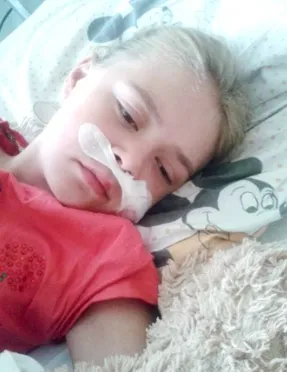
Ola never had a carefree childhood. There were constant restrictions, hospitalizations, missed school trips, no swimming pools, no normal vacations. She was small but obedient and understanding. As the years passed, rebellion appeared. “Mom, why do I have this horrible illness? Why do I spend my life in hospitals? I can’t take it anymore.” What could I tell her—that no one in Poland knew what was killing her? I cried through countless nights, begging God to give me this illness instead, so she could live normally.
In 2013, when Ola turned ten, I hoped that puberty might bring relief. Instead, the disease worsened. In August 2014, she was admitted to the Immunology Department at the Children’s Memorial Health Institute with a fever over 40°C, severe swelling, and loss of consciousness. She was taken to intensive care. Doctors told us she had massive cerebral edema and that they had done everything they could. They gave us no hope. I went there seeking help and was told my daughter was dying.
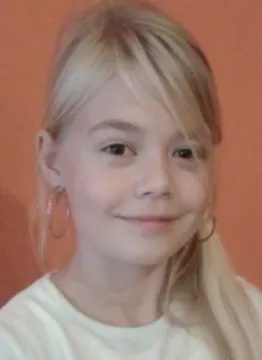
A miracle happened. Ola survived. She fought for a week—and she won her life back. But the damage was severe. Doctors warned she might be paralyzed or severely disabled. Day and night, we stayed with her, teaching her again how to eat, walk, and speak. She regained mobility, but she was left with memory problems, orientation issues, epilepsy, and individualized schooling.
Three months later, it happened again—a second brain swelling. Doctors warned that a third episode might be fatal. Then, at last, test results from London arrived. Ola was diagnosed with a very rare genetic autoinflammatory disease. Doctors in the United States recommended treatment with a biological blocker. We borrowed money and bought a few boxes to see if it worked.
And it worked.
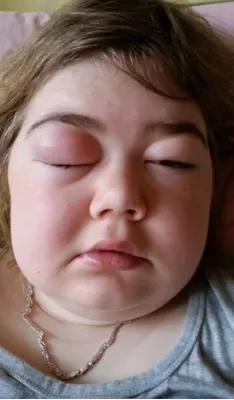
For the first time in years, Ola was not hospitalized. Then the Ministry of Health refused reimbursement. The medication cost 600 PLN a day. Eighteen thousand a month. We were told to stop treatment—and wait.
Today, thanks to extraordinary support, Ola has received reimbursement. She lives. She is safe—for now. And every day without fear is a miracle we will never take for granted.