Depictions of large-scale excavations revealing oversized human skeletons are not supported by any scientifically verified archaeological evidence. To date, no credible discoveries confirm the existence of human remains of such extraordinary scale.
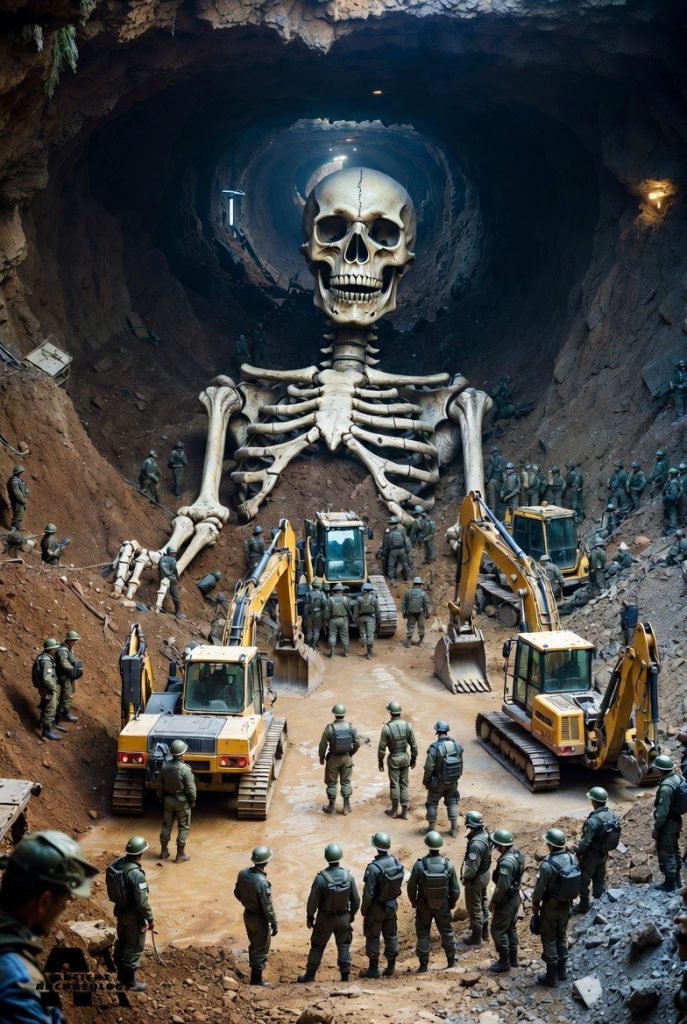
Images and scenes like these are best understood as artistic, speculative, or symbolic representations, often inspired by ancient myths and legends of giants found across many cultures worldwide. From folklore to modern visual media, these narratives have long been used to explore ideas about origins, power, and lost civilizations.
While compelling, such imagery reflects human imagination rather than archaeological reality. Scientific archaeology relies on verifiable data, documented context, and peer-reviewed analysis—standards that these depictions do not meet.
Understanding the difference between myth and evidence allows us to appreciate both storytelling and science without confusing one for the other.