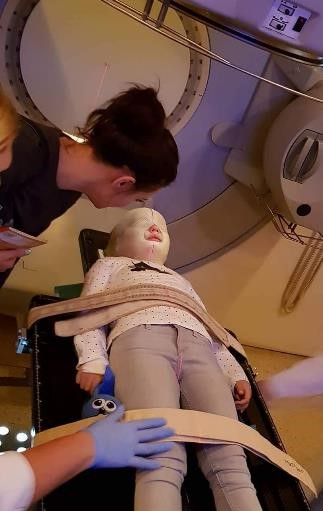
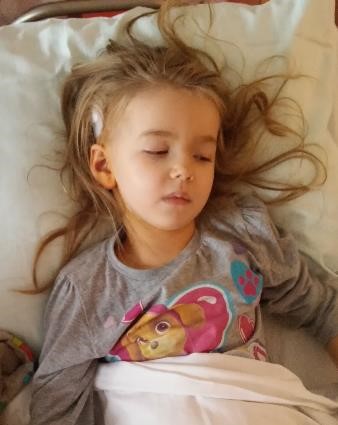
There are no words strong enough to express the pain of losing a beloved child. Martusia is gone… yet she will remain forever in the hearts of those who loved her so deeply, and in the moments they shared together — moments that time, illness, and even death can never take away. Though her life was heartbreakingly short, her courage, her smile, and the love she gave continue to live on. We thank everyone who stood by her side, helping her fight, heal, and feel surrounded by compassion until the very end.
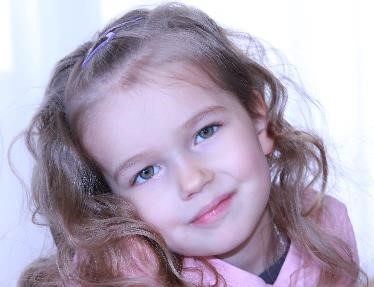
From the very beginning, fear accompanied Martusia’s life — not the ordinary fear every parent feels, but something instinctive, unshakable, as if danger lingered just beneath the surface. And yet, when she was born on October 2, 2012, nothing suggested tragedy. She arrived healthy and strong, earning a perfect 10 on the APGAR scale and becoming the embodiment of her parents’ long-awaited happiness. She learned to walk and talk quickly, amazed everyone with her intelligence and sense of humor, and enchanted all who met her with her beautiful smile. She was, in every sense, a dream child. Nothing foreshadowed the storm that was to come.
Slowly, almost imperceptibly at first, changes began to appear. Around the age of three, Martusia developed sudden outbursts of anger that were initially dismissed as typical preschool rebellion. Then came the clumsiness. She began to stumble and fall, sometimes dropping to the floor as if playing — a behavior later understood as her instinctive attempt to regain balance. She became afraid of climbing stairs and preferred to crawl, which was mistakenly attributed to imitating her younger brother. But when her smile began to tilt to one side, her parents knew something was terribly wrong, even if they did not yet know what it was.
They sought medical help immediately. A pediatrician referred them for further evaluation, and a pediatric neurologist examined Martusia the same day. The assessment was unsettling yet dismissive: physical incoherence, nothing alarming, tests for Lyme disease, and a follow-up appointment in three months. But Martusia’s condition worsened rapidly. She became increasingly unstable, eventually falling even while sitting. Tests ruled out infections and common illnesses. Finally, a CT scan was ordered. Deep down, her mother already knew — and prayed that whatever was hidden inside her child’s head could be cured.
The diagnosis shattered their world.
“There is a tumor.”
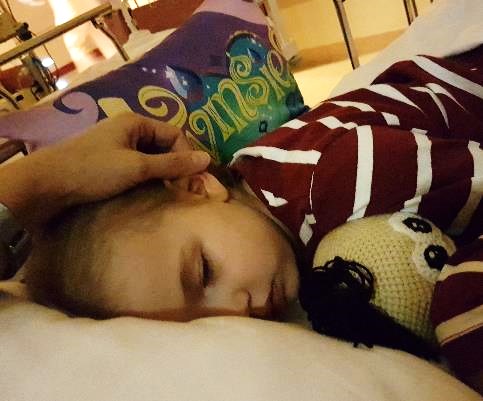
Those words froze her mother from head to toe. The hallway echoed with a scream no parent should ever have to release. That very night, an ambulance raced through the darkness with sirens blaring, carrying Martusia to the oncology ward in Bydgoszcz. On July 25, 2016, an MRI confirmed the worst possible diagnosis:
diffuse intrinsic pontine glioma (DIPG) — the most aggressive and devastating childhood brain tumor. The prognosis was merciless: an average survival of six to nine months.
The fight for Martusia’s life began immediately.
Treatment started at the Children’s Health Center in Warsaw. Chemotherapy, radiotherapy, endless tears, pain, and fragile hope filled their days. Her parents sent medical records to clinics around the world, desperately searching for help. Time and again, the answers came back the same:
“We’re sorry. We can’t help.” Still, they refused to give up.
For nine months after radiotherapy, the tumor remained stable. It felt like a miracle — a brief pause in the cruelty. But in August, the disease progressed again. Martusia’s condition deteriorated rapidly. Left-sided paralysis appeared, her balance worsened, and soon she could no longer stand. Chemotherapy failed. The tumor continued its relentless attack. Desperate, her parents consulted a specialist in London who recommended re-radiation — a highly risky procedure carrying the possibility of severe complications. Despite the danger, they chose to fight.
Martusia became the first child in Poland to undergo re-radiation for a brainstem tumor. The worst complications did not occur. The tumor stopped growing — for how long, no one could say. But treatment options in Poland had run out. The only remaining hope lay in advanced immunotherapy using biologic drugs offered by a private clinic in London. The clinic was ready to admit Martusia immediately, but the cost — approximately 370,000 PLN for initial cycles, excluding travel and accommodation — was beyond the family’s reach.
And still, they fought.
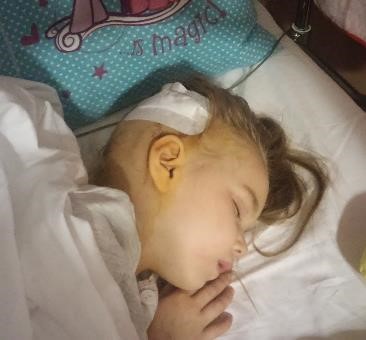
Every day, they watched their beloved little “Mouse” fade, holding onto words she once whispered after a hospital stay:
“Mommy, I don’t want to be an Angel and go back to Heaven… because I will miss you terribly.”
Those words became a prayer. A promise. A heartbreak that will never fade.
Martusia’s journey ended far too soon. But her story is not one of defeat. It is a story of fierce parental love, of courage beyond a child’s years, and of hope that refused to surrender. She taught those around her how deeply one can love, how bravely one can fight, and how precious every moment truly is.
Martusia may be gone from this world, but she will never leave the hearts she touched.
She was — and will always be — profoundly loved.